
Analytics & Intelligence
What is Trade Analytics?
Trade analytics encompasses the systematic application of data analysis, statistical methods, machine learning, artificial intelligence (AI), and big data technologies to examine, optimize, and enhance trading activities across financial markets. It processes vast amounts of historical and real-time data—including trade executions, market prices, order flows, liquidity metrics, and external factors—to deliver actionable insights that drive superior decision-making, risk management, and performance improvement.
In today’s markets (as of 2026), trade analytics has evolved with AI-driven predictive modeling, real-time anomaly detection, and behavioral analytics, helping traders adapt to volatility, regulatory changes, and fragmented liquidity.
Key Aspects of Trade Analytics
Trade analytics spans the entire trading lifecycle, providing tools for evaluation at every stage:
- Performance Analysis Involves reviewing historical trades to compute key metrics such as win rate, profit/loss ratios, expectancy, risk-adjusted returns (e.g., Sharpe ratio), drawdowns, and behavioral patterns in profitable vs. losing trades. This identifies trader biases, strategy strengths/weaknesses, and opportunities for refinement.
- Pre-Trade Analytics Focuses on evaluating market conditions, liquidity forecasts, expected transaction costs, volatility, and optimal entry/exit points before execution. Tools often include pre-trade TCA (Transaction Cost Analysis) models to simulate slippage, market impact, and routing strategies.
- Intra-Trade (Real-Time) Analytics Monitors live positions for emerging risks, opportunities, and dynamic adjustments. Critical in high-frequency trading (HFT), algorithmic strategies, and volatile markets, it leverages streaming data for anomaly detection, order flow analysis, and adaptive execution.
- Post-Trade Analytics Assesses execution quality, actual transaction costs (TCA), slippage against benchmarks (e.g., VWAP, TWAP, arrival price), venue performance, and compliance. Includes peer comparisons and detailed markouts to measure implementation shortfall.
- Advanced Components Incorporates order flow analysis (e.g., volume profiles, delta), sentiment from news/AI, predictive modeling via machine learning, and regulatory surveillance for market abuse detection.
Benefits of Trade Analytics
Implementing robust trade analytics delivers measurable advantages:
- Informed and Faster Decisions: Real-time insights reduce reaction time and improve accuracy in dynamic markets.
- Risk Mitigation: Identifies hidden risks, optimizes position sizing, and enhances compliance with regulations like MiFID II or best execution requirements.
- Strategy Optimization: Backtesting, pattern recognition, and performance attribution refine trading edges over time.
- Cost Reduction: Minimizes slippage, adverse selection, and unnecessary fees through better execution and venue selection.
- Competitive Edge and Profitability: Turns data overload into actionable intelligence, leading to higher returns and consistency.
- Scalability: Essential for managing growing data volumes (projected global data creation exceeding 180 zettabytes in recent years, with finance as a key contributor).
Trade analytics is indispensable for retail traders seeking discipline, institutional investors managing large portfolios, hedge funds pursuing alpha, and market makers ensuring efficient liquidity provision.
Popular Platforms and Tools (as of 2026)
Trade analytics tools vary by user type—institutional vs. retail—and focus (e.g., TCA, journaling, charting).
Institutional Platforms
- Bloomberg Terminal (BTCA): Gold standard for multi-asset TCA, pre/post-trade analytics, real-time data, and peer benchmarking. Excels in fixed income and global coverage.
- Virtu Financial Analytics: Leading TCA provider (often ranked #1 in surveys), with pre/intra/post-trade tools, global peer databases, and workflow integration.
- LSEG Data & Analytics (formerly Refinitiv Eikon/Workspace): Comprehensive real-time data, analytics, and execution tools; strong in customizable dashboards and AI insights.
- Abel Noser (Trade Zoom): Specialized in multi-asset post-trade TCA with detailed venue/algo comparisons.
- big xyt (Open TCA): Unbiased, API-driven TCA for execution analysis and best execution reporting.
- Instinet and Quod Financial: Advanced intra-trade and real-time monitoring for equities and multi-asset classes.
Retail and Individual Trader Platforms
- TradingView: Popular for charting, community ideas, and basic performance tracking; integrates with many brokers.
- TrendSpider: AI-powered automated technical analysis, pattern recognition, backtesting, and scanning.
- TradeZella / TradesViz / Tradervue: Dedicated trading journals with advanced stats (600+ metrics), AI insights, trade replay, and auto-import from brokers.
- Edgewonk: In-depth journaling focused on psychology, custom analytics, and improvement tracking (desktop-based).
- ATAS: Volume/order flow analysis specialist for futures and crypto scalping.
- IG Trade Analytics / TraderVue: Broker-integrated or standalone tools for personal performance reviews.
AI-enhanced tools like Trade Ideas, Pionex, or 3Commas are gaining traction for automated signals and execution in retail spaces.
Future Trends in Trade Analytics
As of 2026, trends include:
- Greater AI/ML integration for predictive signals and behavioral detection.
- Real-time and cloud-based surveillance amid rising regulatory scrutiny.
- Focus on granular liquidity data and multi-venue optimization.
- Expansion into crypto/digital assets with specialized TCA.
Ametheus specializes in:
- Shipment Intelligence: Access detailed bill of lading (BOL) data, including buyer-supplier details, product HS codes, quantities, values, ports, and shipment routes from 200+ countries.
- Advanced Analytics: AI-powered dashboards for trend analysis, competitor monitoring, market forecasting, and risk assessment.
- Custom Reports: Generate insights on demand, such as supplier reliability scores or demand-supply gaps.
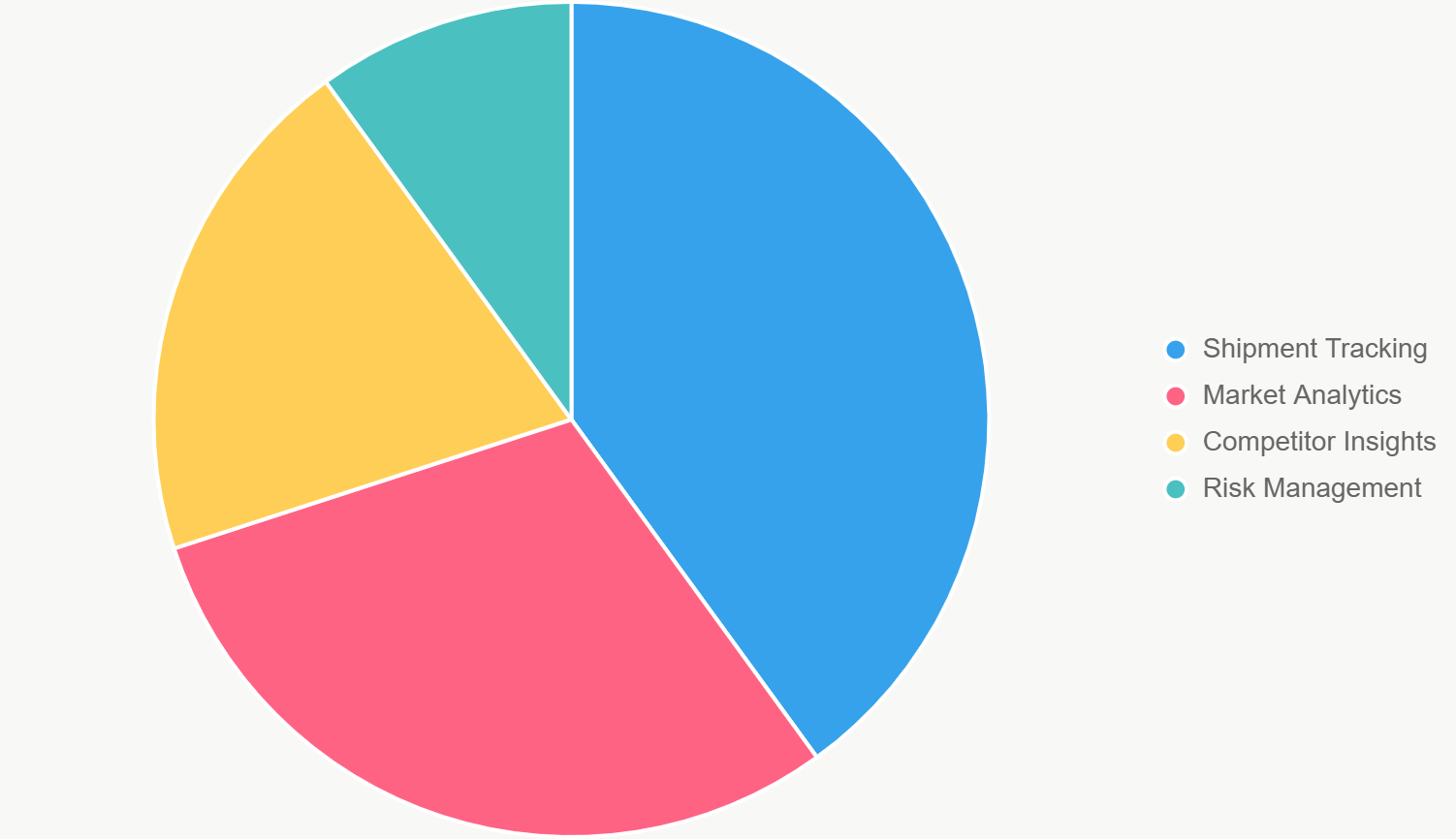
We aggregate data from customs records, satellite tracking, and partner APIs for unparalleled accuracy. (Chart: Breakdown of our key service areas)
Key Features
Tools for Success
- Real-Time Dashboards: Visualize shipments on interactive maps with filters for regions, commodities, and time periods.
- AI-Driven Predictions: Forecast market trends, price fluctuations, and disruptions using machine learning models.
- Competitor Analysis: Track rivals’ import/export activities to identify new opportunities or threats.
- Compliance & Risk Tools: Screen for sanctions, tariffs, and geopolitical risks.
- Integration: Seamless API access for CRM, ERP, or BI tools like Salesforce or Tableau.
All features are user-friendly, with customizable alerts and mobile access. (Image: Modern analytics dashboard showing global shipment data)
Shipment Intelligence
Volza
Volza is a global trade intelligence platform specializing in export-import data. It provides access to detailed shipment records (bills of lading), buyer-supplier information, pricing activity, and market insights from over 200 countries (often cited as 203+). Key services include:
- Discovering profitable buyers, suppliers, products, and markets.
- Monitoring competitors.
- Verified contacts and analytics for importers/exporters.
- Subscription-based access to billions of shipment records for strategic growth in international trade.
It’s primarily used by businesses in sourcing, supply chain, and global trade expansion.
Fastmarkets
Fastmarkets is a leading commodity price reporting agency (PRA) focused on price assessments, forecasts, news, and market analysis. It covers markets such as:
- Agriculture (grains, oilseeds, biofuels).
- Forest products (pulp, paper, lumber).
- Metals and mining (base metals, battery raw materials).
- Energy transition commodities.
Services include real-time pricing, benchmarks, risk management tools, consulting, and industry events. It’s trusted for transparent, market-reflective prices used in contracts and hedging.
Platts (S&P Global Commodity Insights)
Platts, part of S&P Global Commodity Insights, is a premier energy and commodities PRA providing benchmark price assessments, news, analytics, and market intelligence. It specializes in:
- Energy markets (crude oil, refined products, natural gas, LNG, power, coal).
- Petrochemicals, metals, agriculture, and shipping.
Key offerings: Daily price benchmarks (e.g., Dated Brent), market-on-close (MOC) assessments, forecasts, risk data, and advisory services. Widely used as global standards for physical and derivatives trading.
Argus (Argus Media)
Argus Media is an independent commodity PRA delivering price assessments, news, forecasts, and analysis across energy and other markets, including:
- Energy (crude oil, refined products, gas, LNG, power).
- Metals, fertilizers, petrochemicals, agriculture, and transportation fuels.
Services: Transparent benchmarks (used in contracts and derivatives), market reports, consulting, data tools, and conferences. Known for illuminating opaque markets with reliable, methodology-driven pricing.
Summary Comparison
- Volza: Focuses on trade flow data (shipments, buyers/suppliers) for import/export strategy — distinct from the others.
- Fastmarkets, Platts, and Argus: All are price reporting agencies providing benchmarks and insights, but with different emphases:
- Platts and Argus dominate energy/oil markets (often direct competitors).
- Fastmarkets excels in metals, mining, agriculture, and forest products. These services support trading, hedging, risk management, and decision-making in volatile commodity markets.
Top Providers for Global Trade Data (Import-Export Shipment Intelligence)
Global trade data typically refers to detailed shipment-level records (e.g., bills of lading, customs declarations) including buyers, suppliers, products (HS codes), quantities, prices, ports, and dates. This is used for finding partners, monitoring competitors, market analysis, and supply chain insights.
There are two main categories:
- Official/Aggregated Statistics (free or low-cost, high-level monthly/annual data): Best for macroeconomic trends.
- Commercial Shipment-Level Data (paid, detailed real-time or near-real-time records): Best for actionable business intelligence.
Best for Aggregated Global Trade Statistics
These cover nearly all countries with official data but lack granular shipment details.
| Provider | Coverage | Key Strengths | Limitations | Cost |
|---|---|---|---|---|
| UN Comtrade | 200+ countries, billions of records | Most comprehensive official source; detailed HS codes | Delayed (months/years); aggregated, no company names | Free |
| Global Trade Atlas (S&P Global) | 98% of world trade, 101+ countries detailed | Timely monthly stats; forecasts; unified formats | Less granular than BOL data | Paid (enterprise) |
| Trade Map (ITC) | Global, visual tools | Excellent visualizations, market analysis | Aggregated stats only | Free |
| WITS (World Bank) | Global + tariffs | Integrates trade, tariffs, NTMs | Not real-time | Free |
| OEC (Observatory of Economic Complexity) | Global + subnational | Interactive visuals, complexity indexes | Aggregated | Free |
These are widely regarded as the gold standard for reliable, unbiased global overviews.
Best Commercial Providers for Detailed Shipment-Level Data
These aggregate bill of lading (BOL) and customs data for company-specific insights. “Best” depends on needs (coverage, UI, analytics), but top-ranked based on coverage, user traction, and industry recognition:
| Rank | Provider | Coverage | Key Strengths | Best For | Approx. Cost |
|---|---|---|---|---|---|
| 1 | Volza | 203+ countries, billions of shipments | Broadest global coverage; AI dashboards; buyer/supplier discovery; high user traffic | Global outreach, lead generation | Subscription (affordable tiers) |
| 2 | ImportGenius | US + 20+ countries (strong in Americas/Asia) | Detailed US BOL; competitor supply chains; long-established | US/Latin America focus | Paid |
| 3 | Descartes Datamyne | US + global (Latin America strong) | Daily US updates; accurate BOL; compliance tools | Supply chain resilience, US imports | Paid (enterprise) |
| 4 | Tendata | 228 countries | Analytics, CRM integration; contacts | Sales expansion, broad analytics | Paid |
| 5 | Trademo | Global supply chain focus | Sanctions/compliance; deep-tier mapping | Risk management, ESG | Paid |
- Volza often ranks highest for truly global (non-US-centric) detailed data, with strong reviews for usability and value.
- ImportGenius and Datamyne excel in US/waterborne trade depth.
- Others like Export Genius, TradeData.Pro, and TradeImeX are competitive alternatives, especially in Asia/India.
Recommendations
- For comprehensive global coverage with detailed shipments: Start with Volza — it’s frequently cited as a top choice for broad international access.
- For official/aggregated data: UN Comtrade or Global Trade Atlas — unbiased and authoritative.
- Free options: UN Comtrade, Trade Map, or OEC for stats; limited shipment previews on some commercial sites.
- Always trial providers, as data quality varies by country (e.g., better in US/EU than some developing markets).
These rankings draw from industry comparisons, coverage claims, and usage indicators as of 2026. For specific needs (e.g., a region or commodity), the “best” can shift.
