
-
LPG (Liquefied Petroleum Gas)
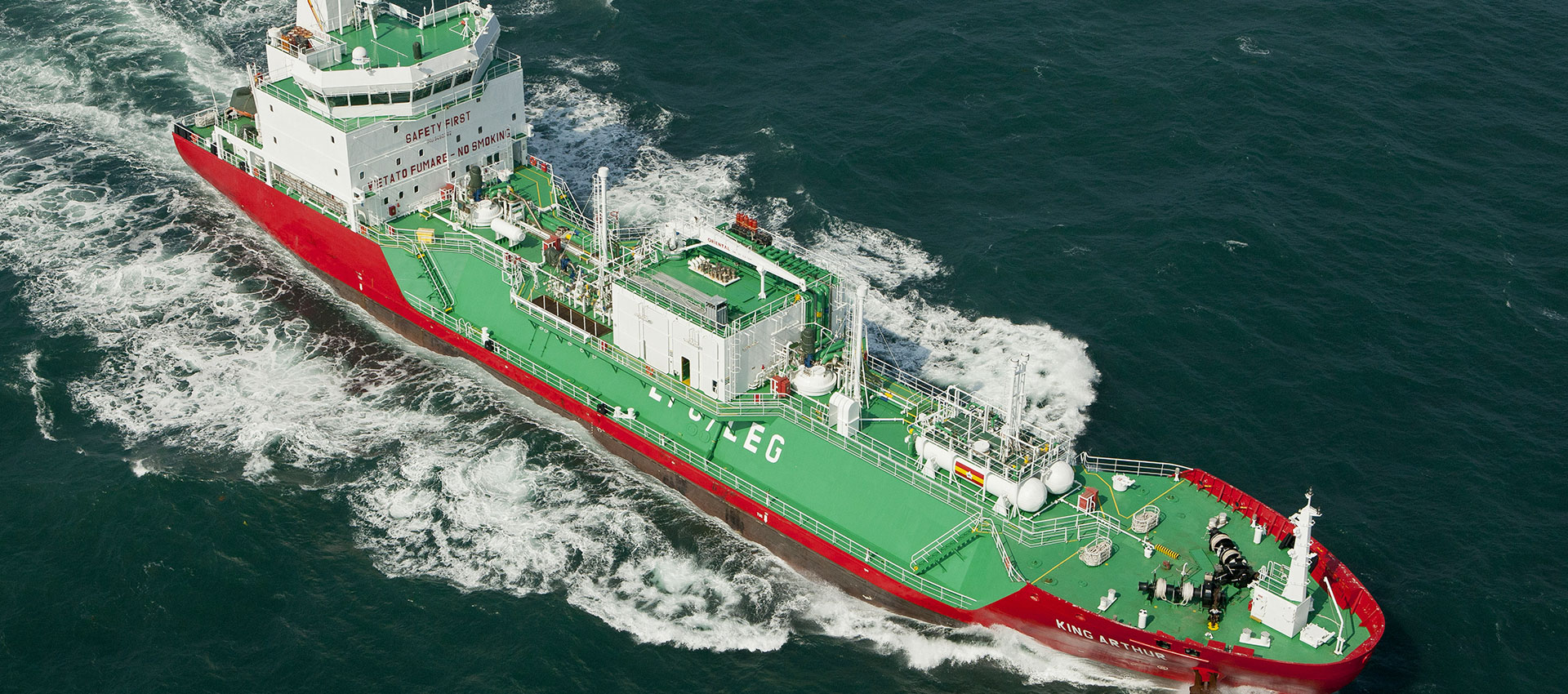
Physical cargoes into South Asia by VLGC, MGC and ISO tank.
Liquefied Petroleum Gas is a flammable hydrocarbon mixture, principally propane (C3) and butane (C4). It is a high-energy-density fuel used for domestic and commercial heating and cooking, autogas, refrigeration, and as a petrochemical feedstock. Clean-burning properties make it an efficient and preferred energy source across South Asia.
About two-thirds of global LPG is produced as a by-product of natural-gas processing. The remainder comes from crude-oil refining through fractional distillation. LPG is traded as pure propane, pure butane, or as custom mixtures specified by the end user. It is stored and moved as a liquid under pressure, or in refrigerated form, in specialised steel vessels.
Pressurized LPG
This is the everyday form most people encounter. The product stays liquid simply because it is held under pressure in a strong vessel (cylinders, bullets, spheres). No refrigeration plant is needed. When you open the valve, pressure drops and the liquid boils into vapour for use.
- Common for domestic cylinders, autogas, and smaller bulk storage.
- Fully pressurized ships are relatively small (typically up to ~4,000–6,000 m³) because the tanks must be thick and heavy.
Liquid LPG (and Refrigerated LPG)
“Liquid LPG” just means LPG in the liquid phase. Almost all commercial LPG is liquid when stored or shipped. In large-scale trade and shipping, the alternative to pressurized storage is refrigerated LPG: the product is cooled to its boiling point and held at nearly atmospheric pressure in well-insulated tanks. This allows much larger, lighter tanks and is the standard for big LPG carriers and terminals.
Practical Differences
- Equipment: Pressurized needs strong pressure vessels; refrigerated needs insulation + a refrigeration/reliquefaction system.
- Scale: Pressurized is economical for smaller volumes; refrigerated becomes preferred above roughly several thousand cubic metres.
- Handling: Transferring between pressurized and refrigerated systems requires careful pressure and temperature management (heating/cooling or pressure equalization) to avoid excessive flash vapour.
- Safety: Both are flammable. Pressurized systems have higher stored energy from pressure; refrigerated systems have cold-burn and boil-off risks.
In short: liquid LPG describes the state of the product; pressurized LPG describes the most common method of keeping it liquid at ambient temperature. The other major method is refrigeration at low pressure. Both deliver the same LPG once it is vaporized for use.
Pressurized LPG and liquid LPG are not different products — both refer to LPG (mainly propane and/or butane) in liquid form. The distinction is about how the liquid state is maintained.
Core Point
LPG is a gas at normal atmospheric pressure and ambient temperature. It is liquefied for storage and transport because 1 litre of liquid expands to roughly 250 litres of gas. There are two main ways to keep it liquid:
Method Temperature Pressure Typical Use Tank Type Pressurized Ambient (~ambient to 45–55°C) High (typically 7–20 bar / ~100–290 psi, depending on mix & temp) Cylinders, bullets, spheres, smaller ships Pressure vessels (Type C) Refrigerated (fully) Boiling point (propane ≈ −42°C, butane ≈ −5°C) Near atmospheric (~0.3–1.5 bar) Large terminals, big ocean carriers Insulated flat-bottom or prismatic tanks Semi-pressurized / semi-refrigerated Intermediate (e.g. −10 to −20°C) Moderate (e.g. 5–8 bar) Medium-sized ships & terminals Insulated pressure vessels
How Ametheus trades LPG
Ametheus buys and sells LPG across the physical chain. We handle spot and long-term contracts, manage logistics from load port to plant gate, and provide regional brokerage. We work directly with major global traders, tier-1 suppliers and refineries.
In India, Bangladesh, Srilanka, Pakistan, Nepal bulk consumers take product by sea and then by road tanker or ISO tank. Retail and commercial users are served from filling plants into cylinders of mixed sizes. Cargo specifications are matched to petrochemical plants, blenders, autogas distributors and bottled-gas companies — not a single off-the-shelf grade.
The Arabian Gulf remains the dominant origin into South Asia. Dubai is the trading, nomination and financial hub. Traditional flows run from the Arabian Gulf to Asia, and also from the Mediterranean and Black Sea when the arbitrage works. Physical cargoes can be hedged with forwards and swaps; the paper sits around the barrel, not instead of it.
Supply options: VLGC, MGC and ISO tank
Buyers choose the mode that fits parcel size, port draft, storage and cash cycle. Ametheus offers all three from the same desk.
VLGC Very Large Gas Carrier
Capacity: 75,000–90,000 m³
Typical parcel: about 40–50 kt
Long-haul AG, US Gulf and Med to Asia
Fully refrigerated bulk cargoes
Lowest unit freight on large volumes
Requires a deep-water LPG terminal
MGC Medium Gas Carrier
Capacity: 25,000–50,000 m³
Typical parcel: about 12–28 kt
Regional and mid-haul trades
Calls smaller or draft-limited ports
Finer inventory and cash control
Useful for split or two-port discharge
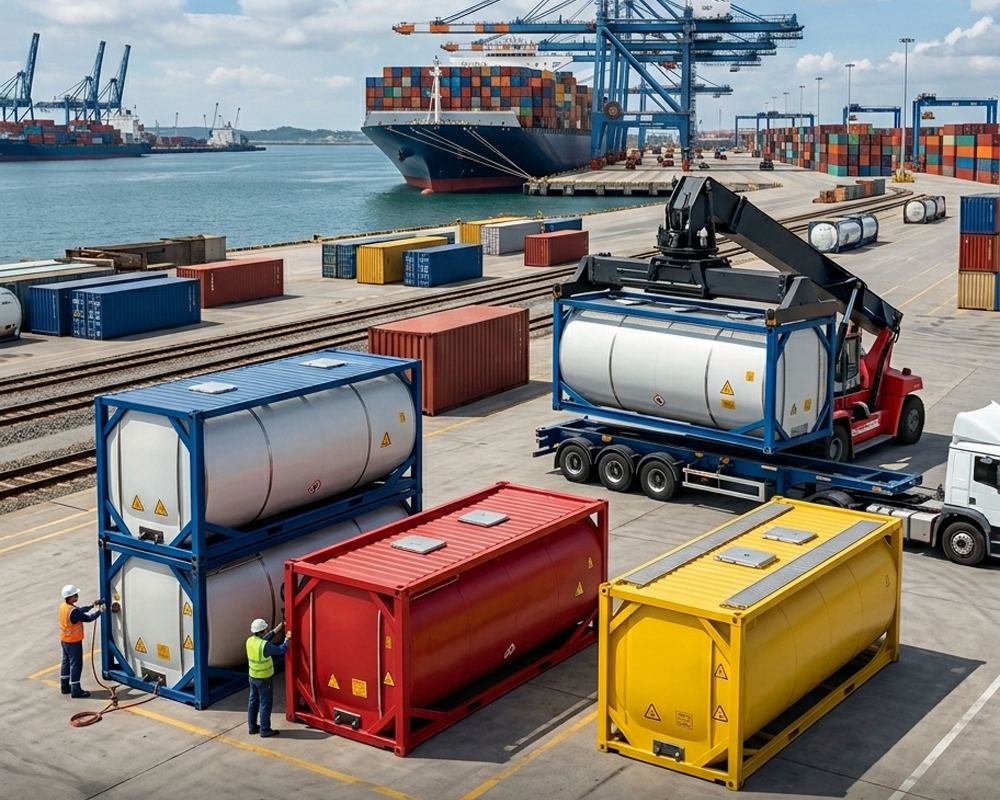
ISO TANK UN T50 intermodal tanks
20 ft: about 24–25 m³ water capacity
40 ft: about 52 m³ water capacity
Payload: about 10–12 t LPG per 20 ft unit
Ship, rail and road without breaking bulk
No dedicated LPG jetty required
Trial lots, inland plants, specialty blends
When an ISO tank is the right answer
A T50 ISO tank sits between a cylinder and a gas carrier. It is a pressurised portable tank built into a standard container frame, certified for LPG, propane, butane and similar Class 2 cargoes.
A 20-foot T50 holds roughly 24,000–24,700 litres of water capacity. Product payload is typically around 10–12 tonnes of LPG, depending on propane/butane gravity and the permitted filling ratio. Forty-foot units run about 51.7–52.0 m³ water capacity.
Tanks move on container ships, rail wagons and flatbed trailers without breaking bulk. That is the practical route into inland plants, smaller ports without an LPG jetty, and buyers who want a first cargo before committing to an MGC or VLGC.
Ametheus can supply a single tank, a multi-tank string, or a programme that steps a buyer from ISO lots into seaborne parcels. ISO tanks cover first miles and top-up; VLGC and MGC carry the bulk programme.
South Asian market
We operate in full compliance with applicable local, national and international regulations governing the LPG industry. Long regional experience sits behind the paperwork.
The long-term aim is to establish Ametheus as a leading regional player and to build a vertically integrated energy group through alliances, joint ventures and targeted acquisitions of storage, midstream and downstream assets in India, Bangladesh, Pakistan and other South Asian markets.
Commercial specification ( Indicative) for South Asia buyers
Propane and butane together make up approximately 100 percent of the mix, typically 35 percent ± 5 propane and 65 percent ± 5 butane. The table below is an indicative composite. Final limits are agreed in the contract and confirmed by independent inspection.
Test item Result (composite) Unit Test method Propane (C3 and lighter hydrocarbons) 35 ± 5 wt% ASTM D2163 / equivalent Butane (C4 and heavier hydrocarbons) 65 ± 5 wt% ASTM D2163 / equivalent C5 hydrocarbons 0.5 ± 0.05 wt% ASTM D2163 / equivalent Ethane (C2) < 0.05 wt% ASTM D2163 / equivalent Butadiene < 0.01 wt% ASTM D2163 / equivalent Total sulphur Report ppm ASTM D6667 / equivalent Vapour pressure @ 37.8 °C Recorded (input) kPa ASTM D2598 / equivalent Density @ 15 °C 0.5 ± 0.1 kg/L ASTM D2598 / equivalent Copper strip corrosion (1 h @ 37.8 °C) 1A — ASTM D1838 / equivalent Residue on evaporation @ 38 °C 0.04 ± 0.01 ml / 100 ml ASTM D2158 / equivalent Free water NIL — Visual Appearance Clear and bright — Visual Odour Detectable — Sensory Molecular weight Report — Calculated Country of origin Any non-sanctioned country — — Why above mentioned mix works in South Asia
Propane at about 35 percent supplies vapour pressure. Cylinders continue to draw cleanly in cooler weather and at altitude. Too little propane and winter or hill stations starve the burner; too much and cylinder pressure rises in tropical heat.
Butane at about 65 percent gives higher energy content per litre and is typically the cheaper component. A butane-weighted mix is the commercial standard for tropical South Asia, where ambient temperature already supports vaporisation.
At consumer level the approved range is generally 30–35 percent propane and 65–70 percent butane. C5, ethane and butadiene are held very low so appliances and crackers stay clean. Vapour pressure at 37.8 °C is recorded on the cargo rather than locked to a single number in this page; the contractual recap sets the limit.
