
Darjeeling Tea: Loose Leaf Collection & Bulk Supply
Product: Darjeeling Tea
Types listed: Black, white, oolong and green loose leaf
Origin: Darjeeling, West Bengal, India
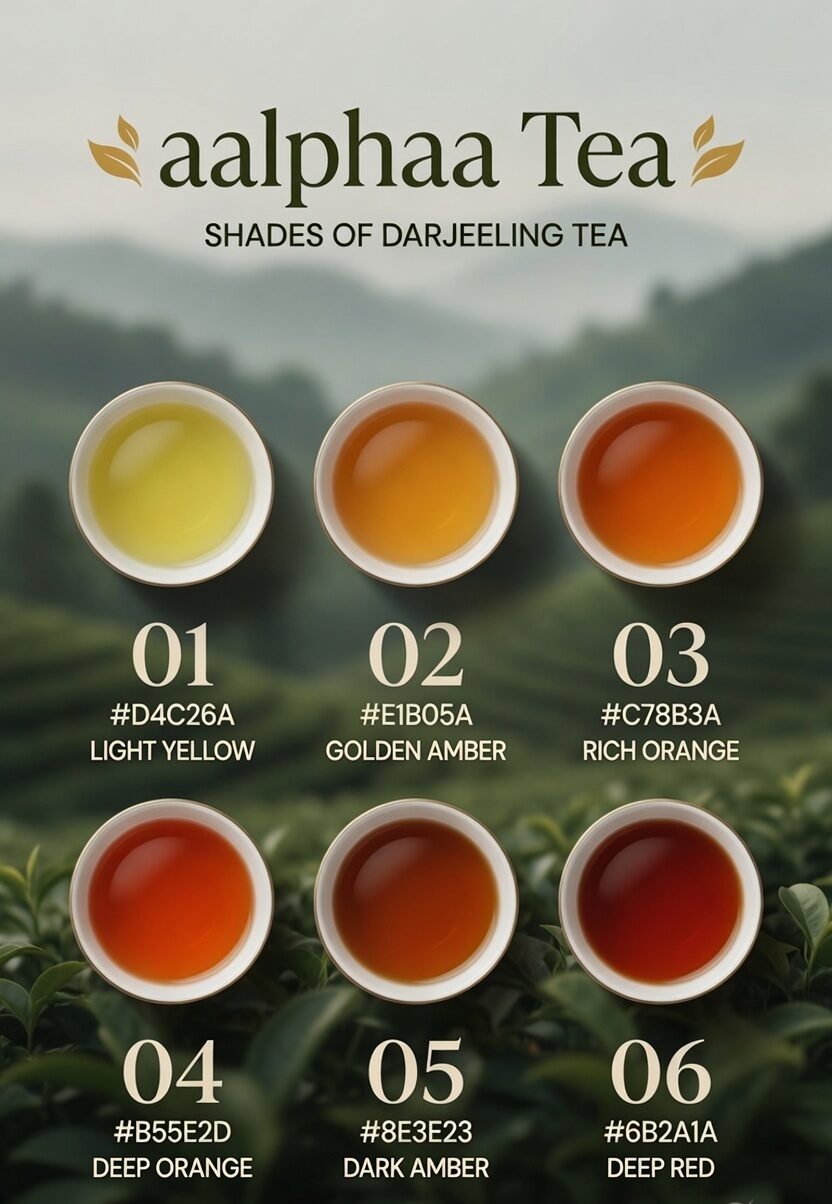
Darjeeling Tea Overview
Darjeeling tea leaves are a variety of the tea plant Camellia sinensis: thin leaves, typically light in colour, with a distinct floral aroma. The name comes from the town of Darjeeling on the foothills of the Himalayas in West Bengal, India. The floral aroma is associated with the growing conditions of those hills, and that different flushes yield different colour, flavour and aroma.
Fermentation or oxidation and the flush distinguish the types listed on this page: Darjeeling black tea undergoes complete fermentation, Darjeeling oolong tea undergoes semi-fermentation, and Darjeeling green tea goes through zero fermentation.
Darjeeling Tea Types
The four main types of Darjeeling loose leaf teas listed are black, white, oolong and green.
Darjeeling black tea
Darjeeling black tea is described as the traditional tea of Darjeeling, grown nearly everywhere in the district, and processed through drying (withering), rolling, fermenting and sorting. It is fully processed, 100 percent oxidized and fermented, with a dark brown, near-black colour and a more robust taste than the other Darjeeling types on this page.
The flavour profile is described as distinct, sweet muscatel flavours with spicy, musky undertones. Flavour varies between flushes, with the first flush milder and later flushes having greater astringent characteristics.
Darjeeling white tea
Darjeeling white tea leaves grow only in specific areas of the Himalayas higher than 2,000 metres above sea level, where temperatures are constantly cold and harvesting is difficult. Leaves are selected, handpicked, sun-dried and hand-rolled. They are described as having a delicate aroma and light colour, yielding a pale golden liquor with a tinge of natural sweetness.
The page also states that white tea variants are the most expensive Darjeeling type, because of limited plantation areas, a harsh cultivation environment, a fine selection process and high international demand. No prices are published on this page.
Darjeeling oolong tea
Darjeeling oolong tea leaves are described as cultivated on estates 1,000 metres above sea level, with a temperature between 41 and 68 degrees Fahrenheit. Leaves are plucked, exposed to sunlight and air for oxidation, then pan-fried and hand-rolled. The semi-oxidized leaf gives a light orange liquor with a tinge of gold. The tea is often steamed to retain flavour and colour, and is described as mildly astringent with distinct muscatel flavours, midway between Darjeeling black tea and green tea.
Darjeeling green tea
Unfermented Darjeeling green tea is described as preserving polyphenol content. Darjeeling green tea has 60% more polyphenol content than other types of black teas. It is described as having a flowery aroma and nutty muscatel flavour, with a yellowish-green brew.
Why Ametheus
- Type descriptions, processing notes, altitudes and the 60% polyphenol figure are those already published on this page.
- No prices, pack sizes or incoterms were added; none were stated except a qualitative remark that white tea is the most expensive type.
Related pages: Orthodox Tea | Tea.
FAQ
Which Darjeeling tea types are listed?
Black, white, oolong and green loose leaf.
Where is the tea grown, according to this page?
Around the town of Darjeeling, on the foothills of the Himalayas in West Bengal, India. White tea is described as growing above 2,000 metres, and oolong on estates at 1,000 metres.
How do the types differ in fermentation?
Black tea is fully oxidized and fermented, oolong is semi-fermented, and green tea goes through zero fermentation.
Inquiry
For current availability, grade, quantity and delivery window, please include:
- Type (black, white, oolong or green) and flush if known
- Quantity and packing
- Destination and preferred delivery window
Commodities desk: [email protected] | [email protected]
New buyers: please complete the Preliminary KYC form or contact us.
We respond on live stems.
