
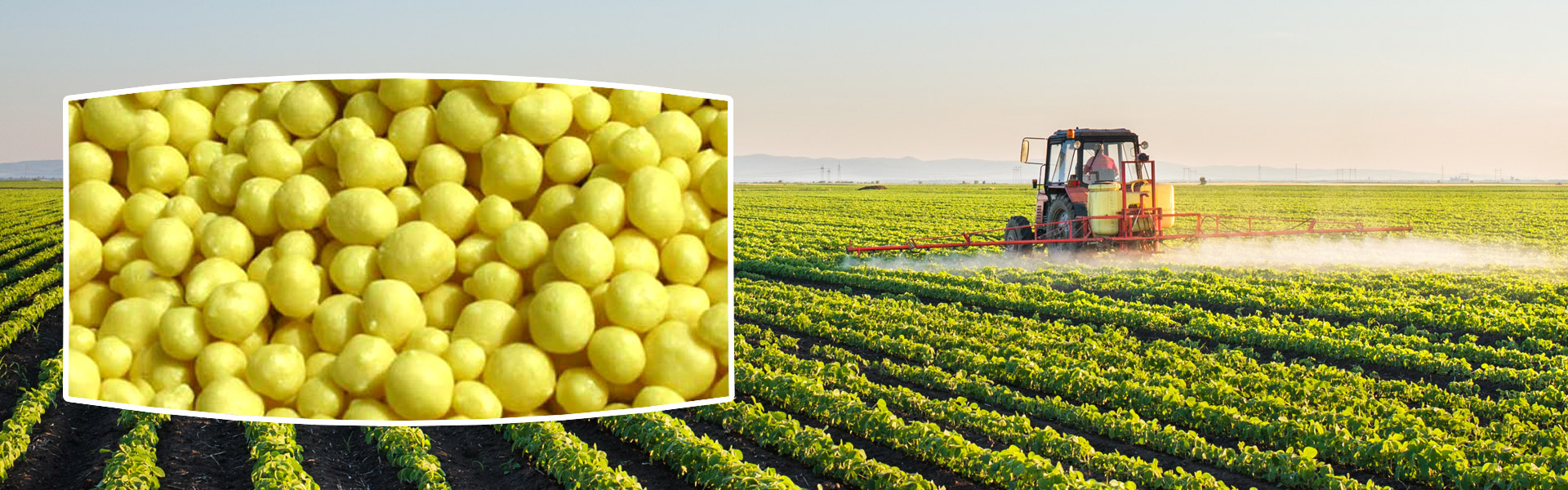
Granular Sulphur
Also known as: Elemental Sulphur (Granular), Agricultural Grade Sulphur Chemical Formula: S (Elemental Sulphur) Typical Purity: 99.5% min (often 99.9%)
Granular Sulphur is a refined form of elemental sulphur processed into uniform, free-flowing granules. It is widely used in agriculture as a source of sulphur nutrient and as a soil amendment to lower pH in alkaline soils. The granular form offers superior handling, reduced dust, and even distribution compared to powdered sulphur.
Sulphur is an essential secondary macronutrient required for protein synthesis, enzyme activity, chlorophyll formation, and overall crop quality. Granular sulphur provides a slow, sustained release of sulphur as soil microbes gradually convert it into plant-available sulphate form.
Technical Specifications
| Parameter | Unit | Typical / Standard Value |
|---|---|---|
| Sulphur Purity (dry basis) | % | 99.5 min (commonly 99.9) |
| Moisture | % | ≤ 0.5 |
| Ash Content | % | ≤ 0.05 |
| Acidity (as H₂SO₄) | % | ≤ 0.02 |
| Organic Matter | % | ≤ 0.05 |
| Colour | — | Bright yellow |
| Form | — | Granular / pastille / globular |
| Particle Size | mm | Typically 2–6 mm (or 1–9 mm) |
| Bulk Density (approx.) | kg/m³ | 1,100–1,300 |
Typical Physical Properties
- Free-flowing with low dust generation
- Insoluble in water (requires microbial oxidation to become plant-available)
- Slow-release sulphur source
- Good storage and handling characteristics when kept dry
Key Benefits
- High sulphur concentration — Nearly pure elemental sulphur provides an efficient and concentrated nutrient source.
- Slow and sustained release — Microbial conversion ensures gradual availability throughout the growing season.
- Soil pH management — Helps acidify alkaline or neutral soils, improving the availability of other nutrients (especially phosphorus and micronutrients).
- Improves crop quality — Essential for protein content, oil synthesis (oilseeds), and flavour development.
- Easy handling — Granular form allows accurate spreading, blending, and reduced dust compared to powder.
- Versatile — Suitable for direct application or blending with other fertilizers.
Recommended Applications
Highly suitable for:
- High-sulphur demanding crops: Canola/rapeseed, wheat, maize, sunflower, legumes, onion, garlic, and brassicas
- Sulphur-deficient soils (common in many intensive farming regions)
- Alkaline or high-pH soils requiring gradual acidification
- Pasture, forage, and horticultural crops
Application Methods:
- Broadcast and incorporated before planting
- Blended with NPK or other fertilizers
- Side-dressing during the growing season (allowing time for microbial conversion)
- Rates based on soil tests, crop requirements, and desired pH adjustment (typically 20–100+ kg/ha depending on need)
Note: Effectiveness depends on soil temperature, moisture, and microbial activity. Conversion to plant-available sulphate is slower in cold or dry conditions.
Packaging Options
- 50 kg moisture-resistant bags
- 1,000 kg jumbo bags (FIBC)
- Bulk (loose) delivery for large-scale agricultural and industrial use
Storage & Handling Recommendations
- Store in a cool, dry, well-ventilated area away from sources of ignition and strong oxidizers.
- Keep bags sealed and protected from moisture.
- Avoid dust accumulation; use appropriate personal protective equipment.
- Elemental sulphur is classified as a flammable solid — follow standard safety guidelines for storage and handling.
Summary
Granular Sulphur is a high-purity, slow-release source of elemental sulphur ideal for correcting sulphur deficiencies and managing soil pH. Its excellent handling properties, sustained nutrient release, and dual role as both a fertilizer and soil amendment make it a valuable product for modern agriculture, particularly for high-sulphur crops and alkaline soils.
For commercial inquiries, current availability, particle size options, or technical data sheets, please contact us.
Email: [email protected]
