
Black Cardamom Powder or Ground
Milled from whole Himalayan pods · 1 kg food-service and bulk · Amomum subulatum
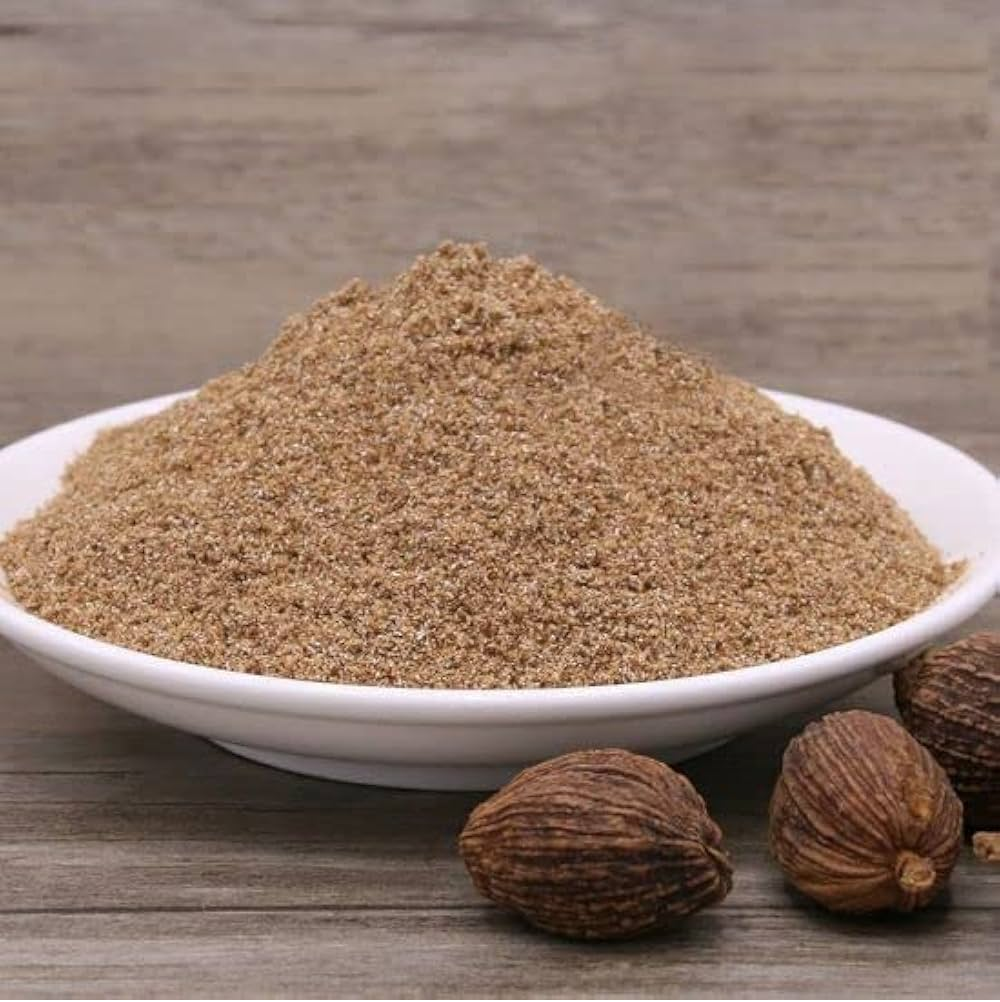
Powder is milled from whole dried pods like these — husk and seed together — then sealed the same day.
This page is for kitchens, masala blenders, marinade plants and private-label packers who buy black cardamom already ground. Whole pods are a store. Ground powder is a clock. The report tells you what should be in the bag, how fine it should be, which drying line to nominate, and how to order from Ametheus so the aroma is still in the pack when it reaches you.
1. What this product is
Ground black cardamom is the whole dried capsule of Amomum subulatum — seed and husk — milled to a specified particle size. It is not green cardamom powder. It is not a husk-only filler. It is not a blend unless the quote says so.
Botanical name: Amomum subulatum Roxb.
Trade names: ground black cardamom, powdered large cardamom, badi elaichi powder, alaichi powder.
HS code (crushed or ground): 0908.32. Whole pods travel as 0908.31; once milled, declare the ground heading.
Standard food-service pack: 1 kg, vacuum-sealed the day of milling. 5 kg and 25 kg industrial packs on request.
Ametheus mills to order from a tested whole-pod lot. We do not bag old warehouse dust and call it this year’s crop.
2. Why powder is a different specification from whole pods
The moment a pod is opened in the mill, the volatile oils that make the spice worth buying start leaving. Heat from a fast hammer mill drives them off faster. Oxygen and light finish the job after the bag is opened.
That is why a powder specification has to cover four things the whole-pod sheet does not: mill type and heat, particle size, pack barrier, and a short best-before from the milling date — not from harvest alone.
| Form | What you are paying for | Practical life |
| Whole pods | Oil locked inside the capsule | About 18–24 months if kept dry and sealed |
| Unopened vacuum powder | Peak aroma held by the pack | Use within 6 months of milling |
| Opened powder | Aroma spending itself | Weeks, not seasons — buy to turnover |
Six months on an unopened pack is a working rule for food-service. After that you are often paying cardamom prices for a flatter, woodier powder. Order to the kitchen’s use, not to the storeroom’s empty shelf.
3. What should be in the bag — and what must not
| In the specification | Ametheus standard |
| Ingredient | 100% milled whole black cardamom pods |
| Origin | Nepal, named eastern hill district on the lot sheet |
| Fillers | None — no extra husk from another lot, no starch, no rice flour |
| Anticaking agent | None |
| Green cardamom cut | None — different species, different flavour |
| Colour or flavour add-back | None |
| Allergen / processing aids | None declared; mill dedicated or fully purged between jobs |
If a cheap powder looks pale, dusty or tastes thin, it is often husk-heavy, old, or cut. Ask for the parent pod grade and the milling date on the label.
4. Which pods to mill — do not pay Bold prices to make powder
Once the capsule is milled, the customer cannot see pod size. Size premium disappears. Fine grade (under 18 mm) is the rational raw material for most powder. Medium is acceptable when you want a slightly oilier grind from plumper seeds. Bold is for whole-pod plates, not for the mill — unless a private-label brief insists on it.
| Parent grade | Use for powder? |
| Fine, under 18 mm | Yes — default for masala and industrial grind |
| Medium, 18–22 mm | Yes — when the brief wants a richer seed fraction |
| Bold, 22–28 mm | Rarely — you are paying for a look the mill destroys |
5. Drying line — the flavour of the powder is decided before the mill
Nominate the cure of the parent lot. Milling does not invent smoke and does not remove it.
| Flue-dried parent lot | Bhatti-cured parent lot | |
| Powder flavour | Cleaner camphor / cineole; easier as a base in a formula you season further | Smoky, roasted; the point of biryani and garam masala blends |
| Moisture target on powder | Cap under 10% (parent lot ≤ 9%) | Keep as low as the lot allows; parent lot ≤ 12% |
| Who should choose it | EU / GCC QA, sauce plants, private label, anyone who does not want smoke as the lead note | South Asian retail lines, biryani kitchens, rub houses that want campfire in the bag |
Ask for 50–100 g of each grind in a first sample. They are different products once milled. Taste them in hot oil, not only dry on a spoon.
6. Grind, moisture and lab sheet
Tell us the sieve you work to. Re-sieving on arrival wastes oil and labour.
| Parameter | Buyer specification |
| Particle size (default) | Fine food-service grind; typically 95–99% through a 300–500 micron sieve |
| Custom grind | State the sieve at quote (coarse rub vs blend powder) |
| Milling method | Cool / stone or equivalent low-heat mill — not a hot hammer mill |
| Moisture in powder | Max 10% (flue parent); keep Bhatti powder as dry as the lot allows |
| Aflatoxin B1 | Below 5 ppb on the parent lot and the powder |
| Total aflatoxin | Below 10 ppb |
| Pesticide residues | Below EU and UAE MRLs |
| PAH | Reported from the parent drying line |
| Volatile oil (indicative) | Present and typical of the parent lot; expect less than whole pods after milling |
| Ash / acid-insoluble ash | In line with spice-powder norms (ash max about 10%; AIA max about 1–3%) |
| Foreign matter | Nil visible; no insect fragments, glass or metal |
| Additives | None |
The same ISO lab family used on whole pods should follow the powder: aflatoxin, moisture, residues, PAH. Print milling date and best-before on every bag.
7. Packs Ametheus offers
| Pack | Who it is for |
| Sample, 50–100 g of each cure | First tasting and sieve check |
| 1 kg vacuum food-service bag | Restaurants, small blenders, marinade trials |
| 5 kg moisture-barrier pack | Central kitchens and mid-size masala rooms |
| 25 kg industrial liner + carton or sack | Seasoning plants and private-label filling |
| Private label, your brand | Retail jars or pouches filled from a dated mill run |
The 1 kg vacuum bag is the working SKU. Vacuum the same day as milling. Leave the seal intact until the bag goes on the line. After opening, decant into a small airtight tin and keep it off the steam and the pass.
8. How to use it — and how not to dose it
Ground black cardamom hits faster and harder than a whole pod simmering in a pot. There is no clean conversion, because husk and seed both go through the mill and the aroma is not split evenly between them. Start well under the whole-pod weight you are used to. You cannot fish the powder out again.
- Rub on lamb shoulder, beef shank or goat before a long roast.
- Fold by weight into garam masala, biryani masala and meat marinades.
- Bloom a pinch in hot oil or ghee at the start of a curry.
- Dose from a dry spoon — never over a steaming pot. Steam clumps the powder and pulls kitchen smell into the bag.
Do not put this powder into chai, kheer, Scandinavian baking or any brief written for green cardamom. Wrong species, wrong flavour.
9. Storage that actually protects the oil
- Cool, dark, dry. Not above the tandoor, not on the pass, not in the fridge door (condensation).
- Unopened vacuum bag: hold until the milling best-before. Six months is the working horizon.
- Opened bag: airtight tin, small working stock only. Do not leave a 1 kg bag open all week.
- Never freeze-thaw an opened bag if you can avoid it — moisture is the enemy of a fine grind.
If you use a kilogram a quarter, buy a kilogram a quarter. This is the SKU where buying ahead loses money.
10. Documents with the shipment
- Commercial invoice and packing list — product named as ground / powdered black cardamom, HS 0908.32
- Nepal certificate of origin
- Phytosanitary certificate
- Per-lot lab report (parent lot plus powder moisture / aflatoxin as agreed)
- Milling date and best-before on each retail or food-service unit
- Halal papers on request
11. How to buy from Ametheus
Tell us you want powder, not pods. The two SKUs are quoted separately.
- Nominate parent cure (flue-dried or Bhatti), pack size (1 kg / 5 kg / 25 kg), sieve if you have one, destination and volume.
- We confirm the parent lot lab sheet, milling window and a quote. Samples of both cures on request.
- You approve aroma, colour and grind. We mill, vacuum the same day, mark the milling date, and ship under the Incoterm you name.
- For regular kitchens we can schedule small dated runs so you are not sitting on six-month-old powder.
| Order ground black cardamom from Ametheus
Ametheus · Kathmandu, Bagmati Province, Nepal SKU: Ground Himalayan black cardamom, 1 kg food-service and bulk. Ask for: parent district and grade, drying line, milling date, sieve, moisture, aflatoxin B1. Add WhatsApp, email and the website form before you publish this box. |
12. Honest limits
Powder cannot out-last whole pods. If your turnover is slow, buy pods and mill on site — or buy smaller dated bags from us.
A clean residue report on the parent lot is not organic certification. Say so if the label must carry an organic mark.
Chinese cao-guo powder and green cardamom powder are different products. Do not accept them against this specification.
Quick reference
| Ask this | Acceptable answer |
| What was milled? | Whole Amomum subulatum pods, Nepal origin |
| When milled? | Date on the bag — not ‘this year’ |
| How milled? | Low-heat / stone or equivalent; sieve stated |
| Which cure? | Flue or Bhatti, nominated |
| Moisture / aflatoxin? | Powder ≤ 10% moisture where specified; B1 below 5 ppb |
| Anything else in the bag? | No |
| Best-before? | About 6 months from milling, unopened |
Ametheus
Milled to order. Dated. Documented.
Buyer limits follow common Nepal export practice and EU / GCC aflatoxin rules. Confirm every mill run against its own certificate and milling date.
